
The Defence Ministry invoked national security to deny information regarding the appointment process of the Chief of Air Staff, including names of officers considered and policy guidelines. This denial, upheld by the Central Information Commission, came after multiple defence offices were unable to identify the authority holding such records, highlighting transparency issues.

The Tamil Nadu government revoked a controversial order exempting its Public (Law and Order) Department from the RTI Act, 2005.

The Digital News Publishers Association (DNPA) has informed the Supreme Court that newsrooms will be forced to shut down if journalists are required to seek permission before publishing information under the Digital Personal Data Protection (DPDP) Act and its accompanying Rules. The Supreme Court has issued notices to the Union ministries of Law and Justice, and Electronics and Information Technology (MeitY) on the DNPA's petition.

The Central Information Commission has said the blanket denial of information sought on Foreign Contribution (Regulation) Act renewal applications by the Union ministry of home affairs "appears to be misplaced and without any basis", while observing that the CPIO prima facie "obstructed" the complainant's right to information.
In what can be construed as a relief to the BCCI, the Sports Ministry has amended the RTI-related provision of the National Sports Governance Bill, placing only those bodies under its ambit which rely on government grants and assistance.

The Delhi High Court has overturned a Central Information Commission (CIC) order that mandated the disclosure of information regarding the Prime Minister's foreign visits on IAF aircraft under the RTI Act. The court cited national security concerns and the physical safety of the Prime Minister, stating that no sufficient larger public interest was demonstrated to override these risks. It also noted that the CIC erred in directing disclosure of Special Foreign Returns (SFR) - II.
The Central Information Commission has ruled that the Board of Control for Cricket in India does not qualify as a 'public authority' under the Right to Information Act, effectively placing it outside the scope of RTI disclosures.

The Delhi High Court has ruled that an individual cannot obtain details of their spouse's income from authorities by filing an application under the Right to Information (RTI) Act.

Chief Minister Devendra Fadnavis has ordered an immediate stay on the controversial Maharashtra Right to Information (RTI) rules following a backlash from transparency advocates and a hunger strike threat by veteran anti-corruption activist Anna Hazare.

The panel said data protection law is designed to limit the processing of personal data to legitimate reasons and adds there is a conflict between transparency and privacy.

Former Rajya Sabha member Saket Gokhale has alleged that the Election Commission refused to disclose details of Chief Election Commissioner Gyanesh Kumar's official visits and the expenditure incurred from public funds, citing 'personal information' under the Right to Information Act.
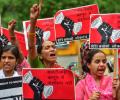
The court stated that creating an absolute bar on the disclosure of information to non-citizens would be contrary to the purpose and object of the RTI Act itself, and the same cannot be read into the legislation.

Geetanjali Krishna explains why this may slow down India's fight against corruption.

The RTI also sought the details of the fees paid by the SBI to senior advocate Harish Salve to defend its case against the disclosure of the electoral bonds' records, citing that the records are held in a fiduciary capacity and the information is personal in nature.

The Anti-Corruption Bureau of Arunachal Pradesh Police has registered a case against retired senior forest officer VK Jawal for alleged misappropriation of Rs 3 crore sanctioned for an eco-tourism project in Balemu. The FIR was filed following a Gauhati High Court directive, after a social activist's complaint highlighted financial irregularities, including the withdrawal of funds in the name of "Self" despite a contract awarded to a private firm.

The Cabinet Secretariat declined to act on complaints from two Election Commissioners regarding a Senior Deputy Election Commissioner's conduct, citing that the communications were in an "individual capacity" and not an official stance from the Election Commission as a whole. This decision was based on concerns about potential interference in the constitutional body's functioning.

Observing that the RTI Act is an effective device for making governance transparent, Bharatiya Janata Party leader L K Advani on Saturday criticised Prime Minister Manmohan Singh's statement favouring a "critical look" at the law and said his party was opposed to any such move. Advani said that only some time back, the government had showered praise on the RTI Act, saying it had brought transparency.

'Sometimes we succeed, sometimes we don't.' 'But you can use the RTI to improve the future.'
The Delhi high court said on Friday the purpose of Right to Information (RTI) Act is to bring in transparency, and if any information has been sought, it should be made public unless exempted from disclosure under the law.

Following is the chronology of events in the case in which a five-judge Constitution Bench of the SC upheld the 2010 Delhi high court verdict which said that the office of the Chief Justice of India falls under the ambit of RTI Act.

The All India Football Federation has disclosed the number of registered football players, coaches, and referees in India in response to an RTI application.

Trinamool Congress leader Saket Gokhale has accused the Election Commission of India (ECI) of withholding details about the software and algorithm used for the Special Intensive Revision (SIR) of electoral rolls. Citing an RTI response, Gokhale highlighted the ECI's claim that the information relates to "commercial confidence, trade secrets and intellectual property matters," raising concerns about transparency in the electoral process.
The Central Information Commission (CIC) has directed the National Rifle Association of India (NRAI) to disclose the specific rules and policies behind its requirement for shooters to submit an affidavit on a non-judicial stamp paper for date of birth verification. The directive came after an RTI appeal sought clarity on the basis for this mandatory requirement, which the NRAI stated was part of its age fraud prevention measures.

'This amendment, if passed, will bring the Information Commission firmly under the authority of the government.'
'By extending the definition of 'personal' to include institutions and not just individuals, the State has equipped itself with a tool to block access to most kinds of information.'

Stay orders keep law out of citizen access even years after CIC rulings on opening market institutions to scrutiny
The unexplained deaths of RTI activists and whistleblowers prove that the RTI Act has threatened many powerful, unscrupulous powers that be.

Taking a cue from the prevailing public mood against the political class, the Congress leadership -- Sonia Gandhi and Rahul Gandhi -- are said to have clinched the argument in favour of deferring the amendment to the Right to Information Act which seeks to keep political parties out of the ambit of the transparency law.
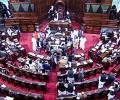
This after high drama in the House over what opposition charged was "intimidation" by the treasury benches to get the motion for sending the amendment to the RTI Act to the select committee rejected.

CCTV footage has emerged showing Youth Congress workers allegedly assaulting YouTuber Rajan Joseph inside Adoor police station in Keralam in July. The visuals, aired on Saturday, have prompted the CPI(M) to demand action against those involved, including Congress leader Sreena Devi Kunjamma, who had filed a complaint against Joseph. Youth Congress leaders deny any assault took place.

The National Election Watch has appealed to all the Members of Parliament from both Lok Sabha and Rajya Sabha not to support a proposed amendment to the Right To Information Act.
Ask for file notings on dual spectrum, new licence issues.

Activists Prashant Bhushan, Anjali Bharadwaj, Yogendra Yadav, and Neha Bora have raised serious questions about the Election Commission's decision-making process for the nationwide Special Intensive Revision (SIR) of electoral rolls. They allege contradictions in the EC's statements, lack of transparency regarding decisions, concerns over centralisation of the electoral database, and unauthorised changes to Form 6, calling for greater accountability and disclosure of records.

The Central Information Commission has directed the sports body and the Ministry of Youth Affairs and Sports to explain.

The commission also suggested that the government publish the cabinet decisions on its official website.

In a landmark ruling to ensure transparency in the functioning of political parties, the Central Information Commission on Monday held that the parties are public authorities and answerable to citizens under RTI Act.
Political parties should not be brought under the ambit of the Right to Information Act by terming them 'public authorities', as this would not only hamper their smooth working but help political rivals to file pleas with malicious intention to seek information, the government told the Supreme Court on Monday.

The Supreme Court has sought the Centre's response on a petition filed by the Digital News Publishers Association (DNPA) challenging the Digital Personal Data Protection (DPDP) Act, 2023, and its accompanying Rules. The DNPA argues that the law, lacking exemptions for journalism, could impede news gathering and infringe upon citizens' right to information. The challenge highlights concerns over consent requirements for reporters and the Act's impact on the Right to Information.

The Petroleum Planning and Analysis Cell (PPAC) has denied an RTI request for data on oil imports from Russia, citing its 'commercial and confidential' nature and exemptions under the RTI Act. The Central Information Commission supported this decision, referencing strategic and economic interests.
